Air treatment solutions
for industrial painting processes.
Air handling units are a key element in industrial painting lines, responsible for supplying clean air, controlled recirculation, and maintaining stable thermal and environmental conditions throughout the process.
At Coapsys, we integrate industrial air treatment systems, selecting equipment from specialized manufacturers and adapting it to the requirements of each booth, process type and line configuration, ensuring operational stability, energy efficiency and finish repeatability.
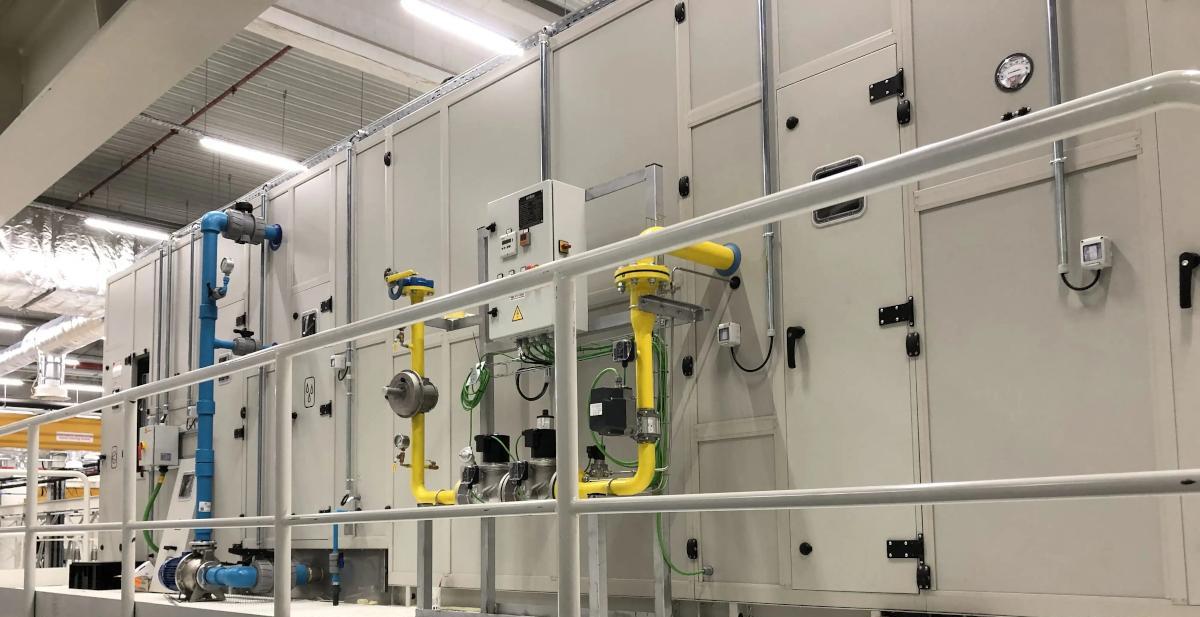
Integration of air handling units in industrial painting lines.
Air handling units are integrated as an active part of industrial painting lines, defining the ventilation, temperature and thermal balance conditions required in application booths, process areas and technical zones.
Proper integration of these systems with spray booths, conveyors, control and automation systems allows stable environmental conditions to be maintained, optimizes energy consumption, and ensures continuous and repeatable operation throughout the production process.
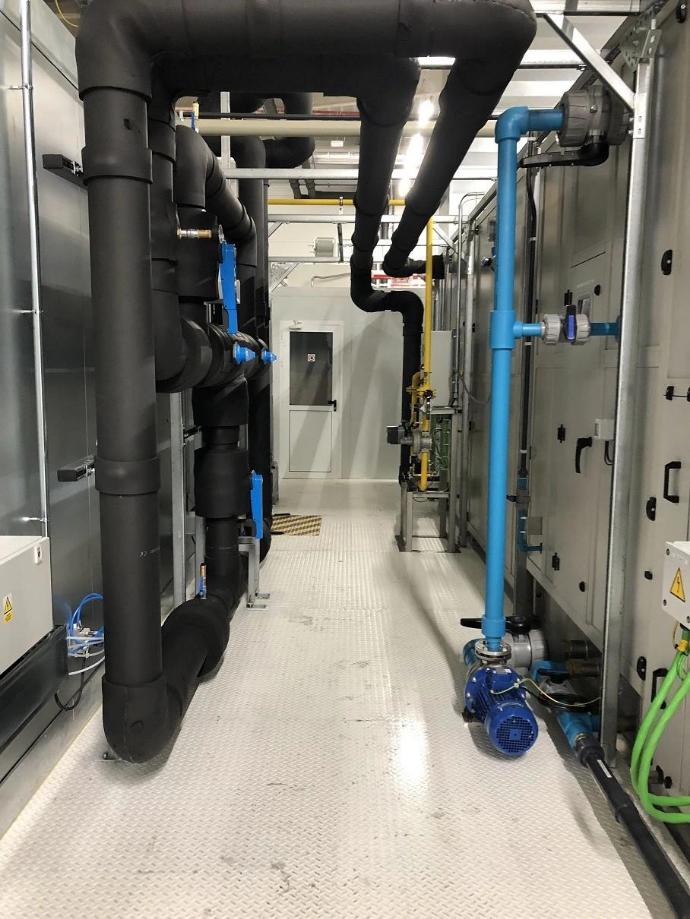
Supply air handling unit (AHU).
Supply air handling units are designed to deliver clean and treated air to spray booths and process areas, ensuring the required temperature, airflow and filtration conditions for proper coating application.
These systems allow a controlled pressure balance and continuous air renewal to be maintained, ensuring process stability and finish quality.
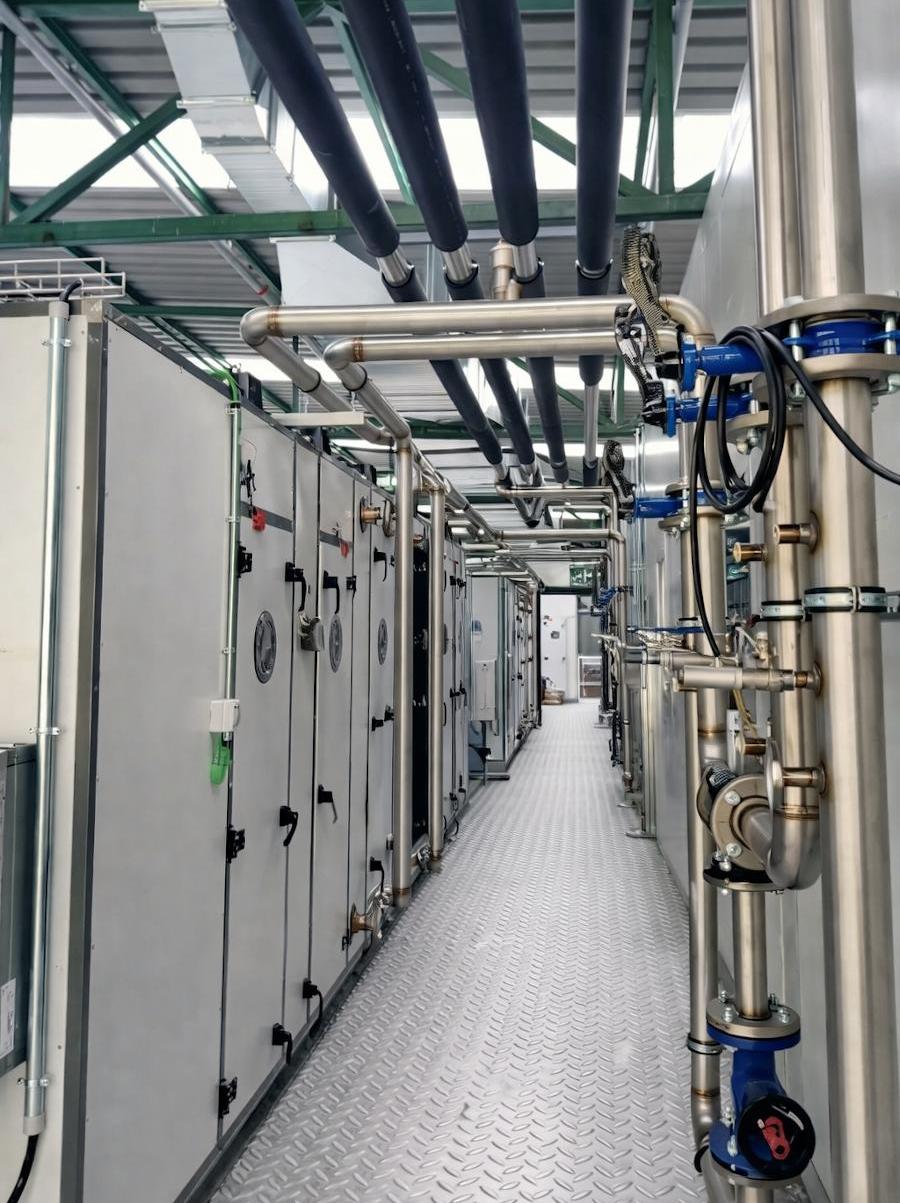
Air recirculation air handling unit (RAHU).
Recirculation units allow part of the treated process air to be reused, adjusting its temperature and environmental conditions before reintroducing it into the system, significantly reducing energy consumption.
The integration of controlled recirculation systems allows stable thermal conditions to be maintained during production and downtime, optimizing energy efficiency without compromising process quality.
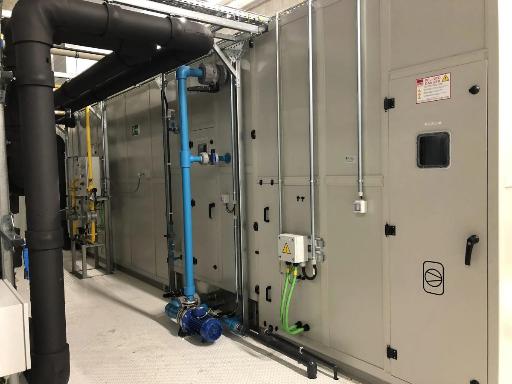
Energy efficiency and thermal control.
The design of air treatment systems is based on precise control of the energy applied to the process, adjusting airflow rates, temperatures and recirculation levels according to actual production needs.
Proper component selection, together with zone-based regulation and integration with control systems, allows unnecessary energy consumption to be reduced while maintaining stable and repeatable thermal conditions throughout the entire paint line.
Air filtration.
The incoming air undergoes a primary and secondary filtration system to remove particles, dust and contaminants, ensuring clean air suitable for industrial painting processes.
Cooling.
The air is cooled through heat exchange coils to reduce its temperature and, when required by the process, remove moisture, allowing precise control of environmental conditions in booths and process areas.
Heating.
The air is heated in a controlled manner to reach the required process temperature, ensuring thermal stability and optimal conditions for coating application and curing.
Humidification.
Humidification allows the air humidity level to be regulated, preventing electrostatic charge issues, finish defects, or variations in the quality of the painting process.
Post-filtration.
Before being supplied to the process, the air passes through a high-efficiency post-filtration stage, ensuring maximum air quality in application booths and critical areas.
Turbine-driven supply.
The air turbine drives the treated air toward the booths and process areas, ensuring the required airflow, pressure and distribution for stable and repeatable system operation.
Automated lines.
Integration of air treatment systems into continuous lines with conveyors, robots and centralized control, ensuring coordinated, efficient and repeatable operation throughout the production process.
Metalworking industry.
Air handling units applied to industrial coating processes for metal components, maintaining controlled environmental conditions between application, flash-off and curing stages.
Plastic components.
Precise air control in plastic part painting processes, regulating temperature, humidity and filtration to prevent surface defects and ensure process stability in technical and decorative applications.
Automotive
Air treatment systems integrated into spray booths, application areas and technical rooms in OEM and Tier 1 lines, ensuring stable temperature, airflow and air quality conditions for high-demand processes.